


We use cookies to improve your online experiences. To learn more and choose your cookies options, please refer to our cookie policy.
02 December, 2025
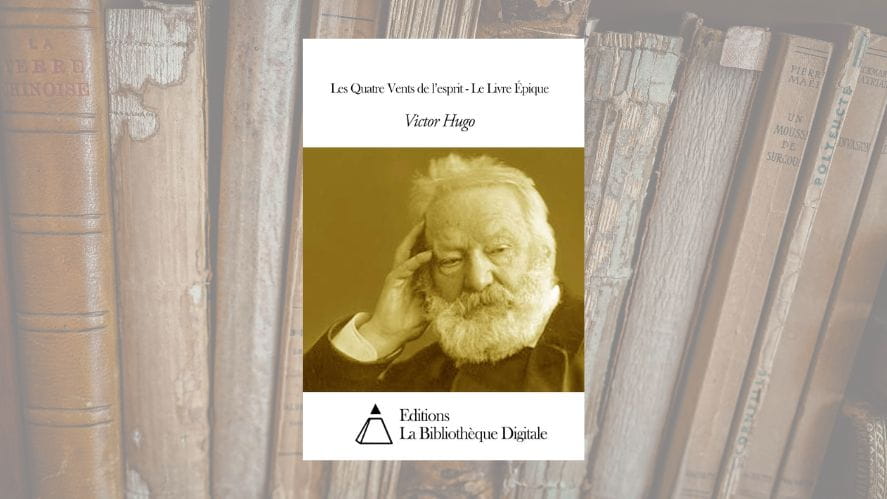
“Every child we educate is a soul won.” (Victor Hugo)
The idea that barbarism always lurks in the shadows of ignorance, ready to strike when the right conditions are met, has long been a central idea in classical philosophical thought. Knowledge, understood as a shield against oppression, injustice and evil, was long seen as our last line of defence.
Victor Hugo embraces this vision, which we can trace back to the Enlightenment, in his quote: “Every child we educate is a soul won.” Taken from Hugo’s 1881 poetry collection Les Quatre Vents de l'esprit (The Four Winds of the Mind), the quote reminds us that education serves not only to teach facts, but to teach humanity – shaping young people into compassionate, responsible human beings.
Can education protect us from ourselves?
Since Hugo’s time, our world has witnessed the atrocities of the Holocaust. As George Steiner has observed, Weimar – the city of Goethe, and a symbol of the influence of modern Western culture – is located only a few kilometres from the Buchenwald concentration camp.
Contrary to what we might believe or hope, knowledge is not enough to protect us from evil. Many post-war intellectuals have written about this tragic reality of our post-modern condition: culture and knowledge, while powerful, do not guarantee our safety.
An over-emphasis on individualistic learning
In recent times, education has shifted. A certain pedagogical movement is drawing on a distorted view of the Socratic method, which advocates the revelation through inner dialogue of truths buried within us. Eager to reconnect with this great figure of Western thought, but without fully understanding the approach, this movement emphasises the student’s personal fulfilment and freedom at the risk of sacrificing deeper knowledge and wisdom.
In this trend that prioritises autonomy and individual freedom, the individual becomes the new centre of gravity, and education becomes more akin to entertainment rather than true transmission.
True education is more than self-discovery
Not everyone can be Socrates, and as the historian Pierre Legendre says, one cannot build oneself up by relying on oneself. Learning must involve otherness. Students need to engage with the ideas and knowledge that have shaped the world in which we live. After all, that is the same world in which they must live.
Truly ambitious and forward-looking schools understand this. Teaching is about transmission. The word “education” comes from the Latin ex-ducere, “to lead out”. As educators, our role is to draw students out of their self-sufficient mindset – not to reinforce it through a mistaken view of “autonomy” and “freedom”. We must give them the keys to navigate and thrive in a world that existed before them – and one that will continue to exist once they are gone.
At Collège Champittet, we believe that if our teachers transmit this legacy to our students, then we can indeed “win” souls. We can nurture young people who are capable of independent, reasoned though – not guided by base instincts or short-term desires. These “nascent beings” – to use Hannah Arendt’s expression – will be ready to not just face the world, like adventurers embarking in unknown lands, but to build it, like enlightened creators.
That is a huge responsibility – but also the greatest act of freedom.
Related news
News image ![Building confidence in our students | Collège Champittet - How we build confidence in our children]() Blog | Collège Champittet News | Our Blog
Blog | Collège Champittet News | Our Blog
 Blog | Collège Champittet News | Our Blog
 How to build confidence in students
Contrary to popular belief, intelligence isn’t, in fact, the number one driver of academic achievement. It’s actually self-confidence.
News image ![education]() Blog | Our Blog | Collège Champittet News
Blog | Our Blog | Collège Champittet News
 Blog | Our Blog | Collège Champittet News
 Educating both mind and heart: Why ethics matters
It has often been said that “educating the mind without educating the heart is no education at all.” Yet, the question of how to develop a strong moral compass is often brushed aside as schools focus on test scores and academic results. At Collège Champittet, we consider ethics to be inseparable from a well-rounded education.