


.jpg?h=499&iar=0&w=887&rev=b18cccbf174745ee852b51e14bf7b151&hash=F7A53903958FAB1B82908690B04339FD)
We use cookies to improve your online experiences. To learn more and choose your cookies options, please refer to our cookie policy.
01 December, 2025
How Swiss education has changed since 1960
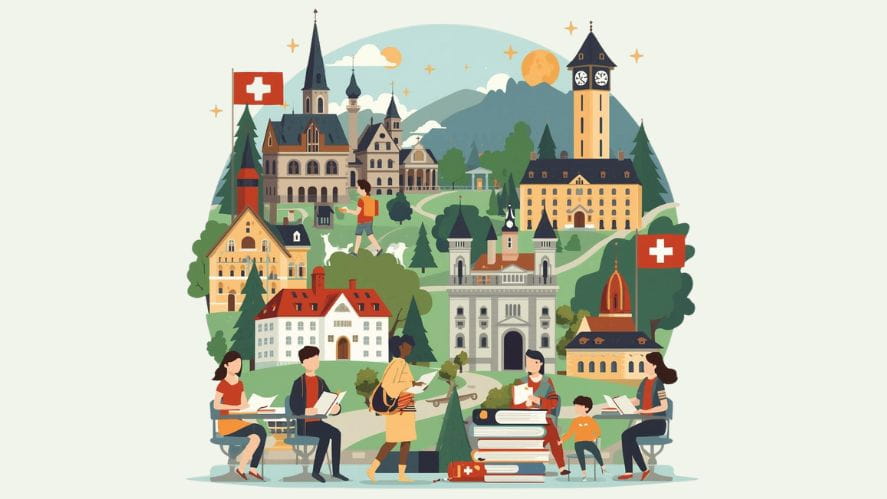
Many people know that the Swiss education system has a longstanding reputation for quality. However, what may be less familiar to many are the changes that this system has undergone over the decades. Here, we take a look at just a few:
Structure and length of compulsory schooling
Swiss political federalism defines the structure of the education system, with responsibility largely resting with each canton. However, thanks to a series of inter-cantonal agreements (concordats) over the decades, today’s system has become more harmonised.
By 1970, compulsory schooling had been raised from 8 to 9 years in Switzerland, with students leaving school on average at 15 years of age. Over time, there was a general tendency for the school day and the number of compulsory years to increase. Today, mandatory schooling lasts for 11 years, including 8 years of primary and 3 years of secondary school.
Another change for Swiss students has been the disappearance of school on Saturday mornings. For many years, it was common to have a 6-day school week from Monday to Saturday, with Wednesday and Saturday afternoons off. The first municipalities in Uri began to move to a 5-day week in the early 1970s, while authorities in Basel waited until 2002 to eliminate school on Saturday mornings.
Changing attitudes in education
The horrors of Nazism led to a questioning of authority in the post-war years – and this included in education. By 1968, there was a trend toward envisioning a new style of education in Switzerland that could reflect a new model for society – more compassionate, and less authoritarian.
Through this more open, nurturing approach, schools were seen as places where talent was waiting to be unlocked. A number of experimental private schools opened during this period based on this spirit of inspiring children to want to learn.
Today’s uniquely Swiss approach
The Swiss educational landscape today stands out for its flexibility and high quality. The country’s well-established vocational education and training (VET) track enables career-focused students to combine academics with practical on-the-job learning. Meanwhile, the general education track prepares students for industry-oriented or academic universities through the Specialised Baccalaureate or Swiss Baccalaureate.
The Swiss education system also prepares students to thrive in a multilingual society – students often learn more than one of the country’s four national languages, in addition to English or another foreign language.
At Collège Champittet, we are proud to belong to the tradition of educational excellence in Switzerland. From nurturing multilingual learners to unlocking the potential of every student. We see ourselves as a Swiss school open to the world.
Related news
News image ![Our 2026-2027 afterschool activities - Our 2026-2027 afterschool activities]() News | Collège Champittet News
News | Collège Champittet News
 News | Collège Champittet News
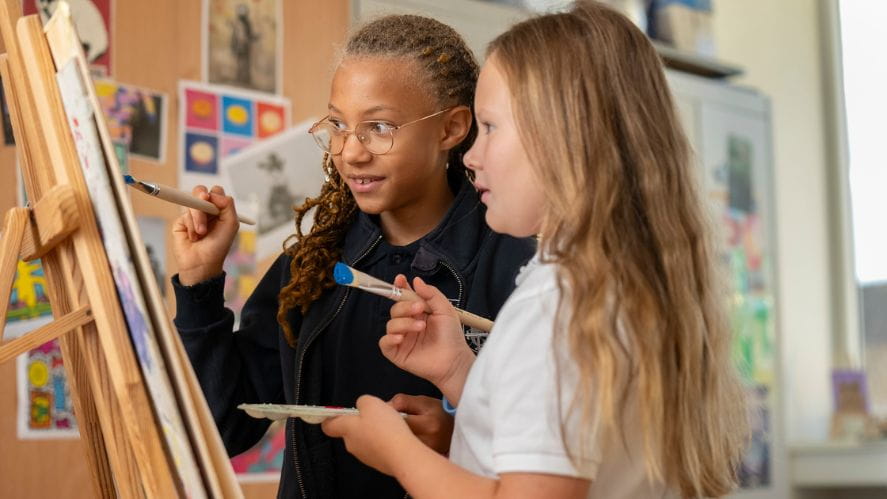
 Discover our 2026-2027 afterschool activities
With our beautiful forest – home to our beloved Forest School – on the shores of Lake Geneva, our historic Collège Champittet campus is an exceptional place for students to learn, explore and grow.
News image ![Origami dove artwork - Origami dove artwork]() News | Collège Champittet News
News | Collège Champittet News
 News | Collège Champittet News
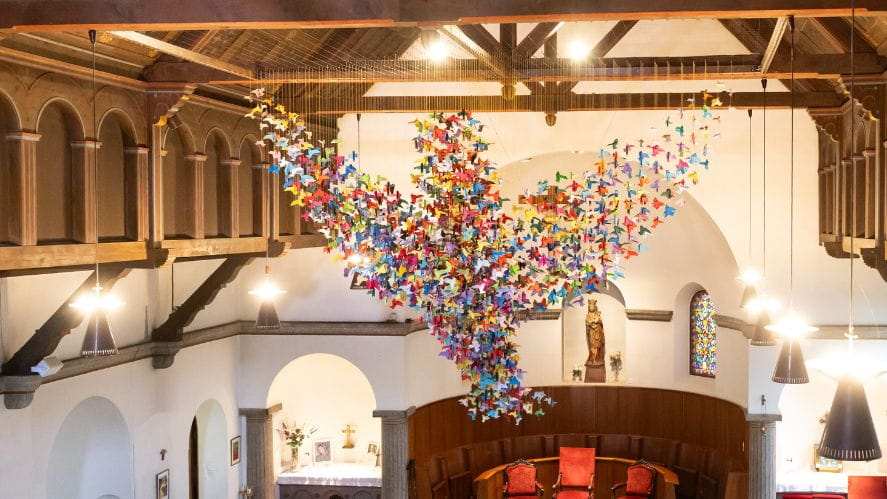
 Origami dove artwork: our collective tribute
In June, a meaningful new art installation came to grace the ceiling of our Champittet chapel – a multicoloured dove, consisting of 3,000 handmade origami pieces.