

.jpg?h=499&iar=0&w=887&rev=b18cccbf174745ee852b51e14bf7b151&hash=F7A53903958FAB1B82908690B04339FD)

We use cookies to improve your online experiences. To learn more and choose your cookies options, please refer to our cookie policy.
19 December, 2025
Educating both mind and heart: Why ethics matters

It has often been said that “educating the mind without educating the heart is no education at all.” Yet, the question of how to develop a strong moral compass is often brushed aside as schools focus on test scores and academic results. At Collège Champittet, we consider ethics to be inseparable from a well-rounded education.
The research on dishonesty among university students is equally concerning. A study led by marketing professor Glen Brodowsky has found that business students who tolerate cheating in the classroom are more likely to tolerate unethical corporate behaviour.
Alarmingly, academic cheating appears to be on the rise due to multiple factors, such as the pressure to perform and the widespread access to AI and other tech-powered tools. This means that schools have an even more important role to play in teaching right from wrong from an early age.
Although aimed at business students and business schools, the article addresses aspects that apply to all school systems and students of all ages. Weybrecht suggests that schools should make room for ethics. This means going beyond what is right and wrong and helping students to understand the reasons and impacts of their behaviour. Giving students the courage to ask the right questions and the confidence to make what they believe to be the right decisions is an invaluable lesson for confronting the challenges of adulthood.
The rest of us – their adult role models – sometimes find ourselves equally confused as it has become so hard to distinguish between fact and fiction. However, as educators and adults, we bear the responsibility and the duty to give the example of how to live life in an ethical, correct way.
Perhaps, if we get this right, our students will be the forward-thinking people encountered in the future in enlightened workplaces, universities and business schools. If so, they will make the world a better place – and we will have carried out our mission to educate our students to be a force for good in our world.
Do cheating students become dishonest adults?
It is never too early to learn the difference between right and wrong – indeed, the earlier we develop this skill, the better. Studies have shown that students who cheat at school are more likely to behave dishonestly as adults. According to a survey by the Josephson Institute of Ethics, adults who cheated on exams as high schoolers are three times more likely to lie to a customer or inflate an insurance claim, twice as likely to deceive their boss, and one-and-a-half times more likely to lie to a significant other or cheat on taxes compared with those who never cheated.The research on dishonesty among university students is equally concerning. A study led by marketing professor Glen Brodowsky has found that business students who tolerate cheating in the classroom are more likely to tolerate unethical corporate behaviour.
Alarmingly, academic cheating appears to be on the rise due to multiple factors, such as the pressure to perform and the widespread access to AI and other tech-powered tools. This means that schools have an even more important role to play in teaching right from wrong from an early age.
Asking “how” (not “if”) educators should teach ethics
In this article on teaching students to be ethical, author Giselle Weybrecht observes that the same question – “Can ethics be taught?” – has arisen at conferences time and time again. She argues that the real question we should be asking is how to teach this indispensable subject, rather than whether it is necessary.Although aimed at business students and business schools, the article addresses aspects that apply to all school systems and students of all ages. Weybrecht suggests that schools should make room for ethics. This means going beyond what is right and wrong and helping students to understand the reasons and impacts of their behaviour. Giving students the courage to ask the right questions and the confidence to make what they believe to be the right decisions is an invaluable lesson for confronting the challenges of adulthood.
Preparing students for real-world complexity
Our students are growing up in a world that is increasingly complex. They are inundated with information, both real and fake, and it is difficult for them to distinguish between the two.The rest of us – their adult role models – sometimes find ourselves equally confused as it has become so hard to distinguish between fact and fiction. However, as educators and adults, we bear the responsibility and the duty to give the example of how to live life in an ethical, correct way.
Our responsibility as educators and adults
Our job is to foster deep, open discussions between educators and students. We must give our young people the confidence to ask us the difficult questions, while ensuring that they feel heard and understood. We should invite them to learn from enlightened speakers with proven credibility, who exemplify courage in the face of difficulty.Perhaps, if we get this right, our students will be the forward-thinking people encountered in the future in enlightened workplaces, universities and business schools. If so, they will make the world a better place – and we will have carried out our mission to educate our students to be a force for good in our world.
Related news
News image ![Our 2026-2027 afterschool activities - Our 2026-2027 afterschool activities]() News | Collège Champittet News
News | Collège Champittet News
 News | Collège Champittet News
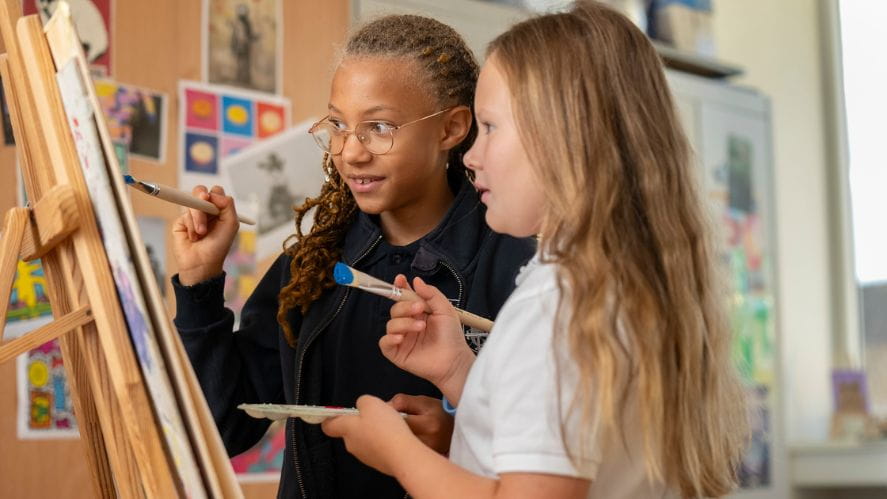
 Discover our 2026-2027 afterschool activities
With our beautiful forest – home to our beloved Forest School – on the shores of Lake Geneva, our historic Collège Champittet campus is an exceptional place for students to learn, explore and grow.
News image ![Origami dove artwork - Origami dove artwork]() News | Collège Champittet News
News | Collège Champittet News
 News | Collège Champittet News
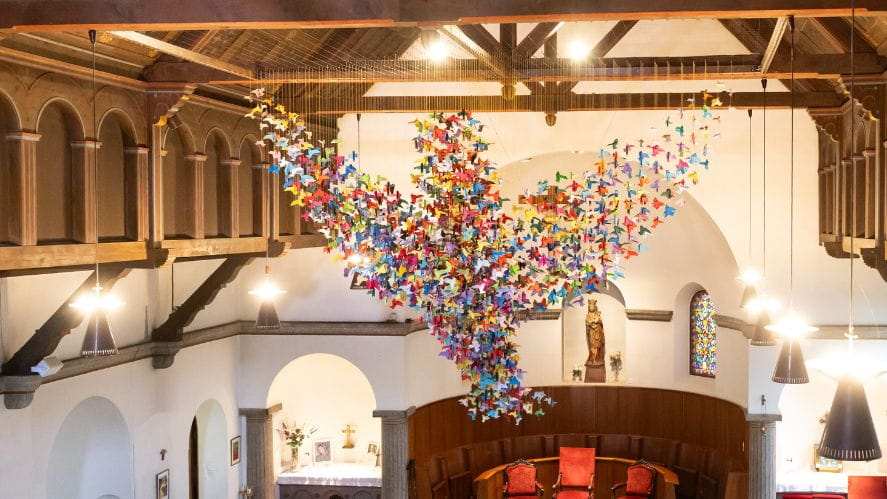
 Origami dove artwork: our collective tribute
In June, a meaningful new art installation came to grace the ceiling of our Champittet chapel – a multicoloured dove, consisting of 3,000 handmade origami pieces.