What you can do now
If there is still time before term begins, try to make sure your child knows at least one person at the new school. Contact the school and ask whether they can connect you with another family in the same year group. Even one conversation before the first morning changes the dynamic considerably.
Walk the route to school together if you can. Show your child where the entrance is, where the canteen is, where the toilets are. These details sound minor, but they matter deeply to children, particularly younger ones, for whom logistical uncertainty compounds social anxiety.
Talk about what to expect, including the parts that feel uncertain. Children are not reassured by relentless positivity. They are reassured by a parent who acknowledges that the first week might feel strange and that is completely normal. Our back-to-school checklist for Geneva families covers the practical side of preparation in full.
What your child experiences in week one
The first week is about orientation, not connection. Friendships take longer than a week to form. Reassure your child that it’s perfectly normal not to have close buddies by Friday. Real friendships tend to form in weeks two and three, once the initial strangeness starts to lift.
Your child will almost certainly come home more tired than usual in the first week. Navigating a new social environment uses significant cognitive energy, often more than formal lessons. Keep after-school life calm. Resist the urge to fill the evenings.
Listen more than you ask. The question “How was school?” rarely produces a useful answer. Try something more specific: “Who did you sit next to at lunch?” or “What was the most unexpected thing that happened today?” These invite your child to share what mattered most in their day.
If your child is struggling
Some anxiety in the first few weeks is entirely normal. Certain signs, though, may suggest that a child needs more support than the transition naturally provides.
Persistent stomach aches or headaches on school mornings, refusing to talk about school at all, a significant change in appetite or sleep, or a child who is clearly unhappy three weeks in – any of these signs are worth raising with the school's pastoral team. Most established international schools are used to these conversations and have designated people for new student welfare. Raising the issue early is always better than waiting.
What good schools do differently
A school's approach to new students tells you a great deal about its culture. The difference between a school that buddies every new child with an existing student from day one and a school that relies on the class teacher to manage introductions informally is significant in practice, even if it is invisible in the prospectus.
Proactive pastoral systems, where a named adult checks in with new children in the first two weeks rather than waiting to be approached, tend to help children settle faster. So do structured opportunities for new students to connect with peers outside the classroom, through extracurricular activities, form time or house groups. As a parent, you should ask your school directly what their induction process involves.
How Collège du Léman welcomes new students
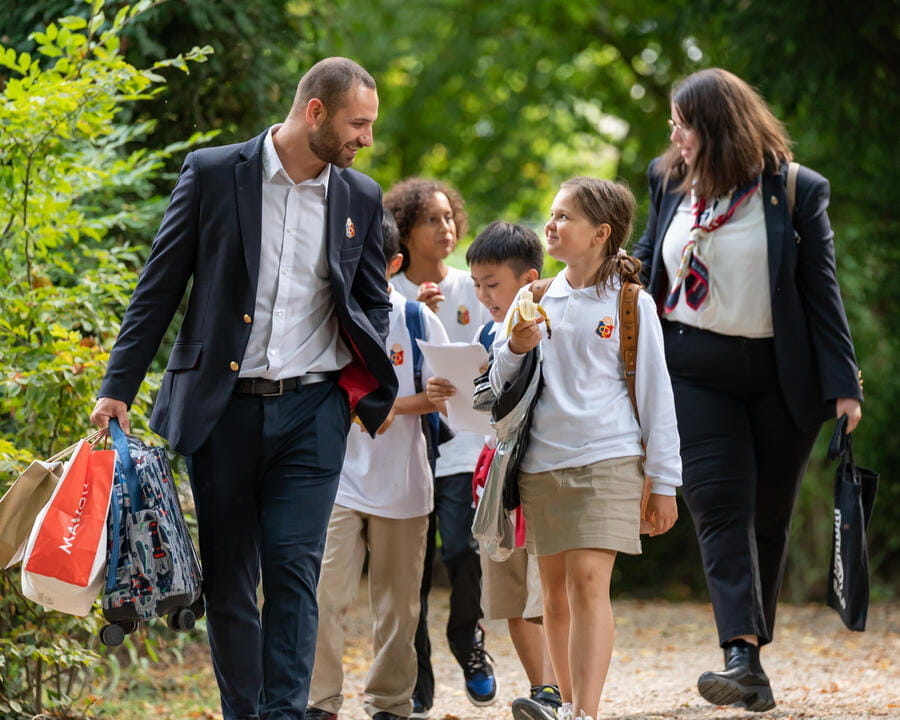
At CDL, every new child is paired with a peer buddy from their first day. This is not a passive arrangement, but an active part of how the school manages the first weeks for new students, making sure no child walks into an unfamiliar environment without someone alongside them.
The school's full-time counsellors are on campus from the start of term, available for everyday support for newcomers as much as for bigger pastoral needs. In a community of 120-plus nationalities on one campus in Versoix, the majority of students know what it feels like to arrive somewhere new. That shared experience tends to make CDL an especially welcoming place for new arrivals.
You can find out more about pastoral care at CDL and what the first weeks of term look like for new students.
Frequently asked questions
How long does it take a child to settle into a new school?
Most children feel genuinely comfortable by the end of the second or third week. Some settle faster, particularly if they already know someone. If a child is still visibly unhappy after four or five weeks, it is worth speaking to the school's pastoral team rather than waiting it out.
What should I do if my child says they have no friends?
Take it seriously but do not panic. Friendships form slowly in new environments. Ask the school whether extracurricular activities or after-school clubs might help your child connect with peers outside the classroom. A shared interest is often a faster route to friendship than a shared timetable. At CDL, the range of after-school activities is one of the practical ways the school helps children find their people.
Is it normal for children to be exhausted after starting a new school?
Yes, completely normal. Social processing in an unfamiliar environment uses significant cognitive energy. Most children come home drained in the first week, sometimes even tearful. Keep bedtimes consistent and after-school life calm. The exhaustion usually eases by the end of the second week.




/cdl_geneva_sept-2021_318_11zon.jpg?h=4000&iar=0&w=6000&rev=f39b34167aac429e9f7594d9bb68996a&hash=33548F58730B71191DABAEEED41CA4BF)