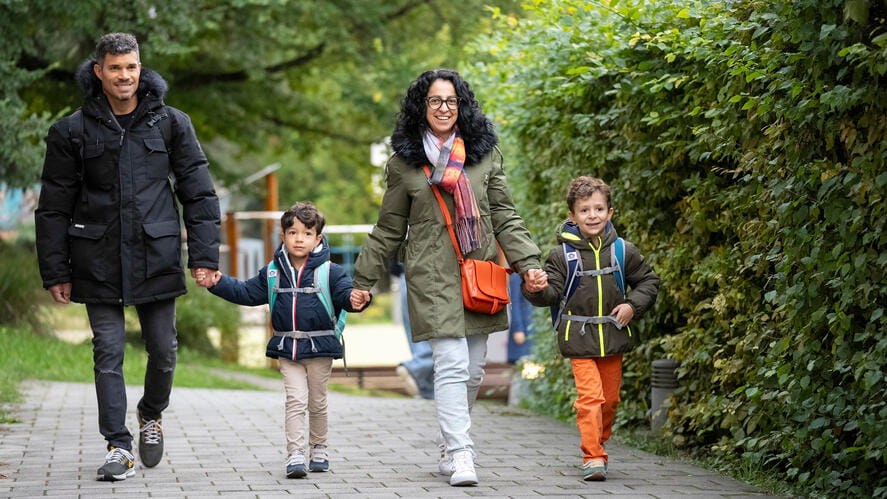
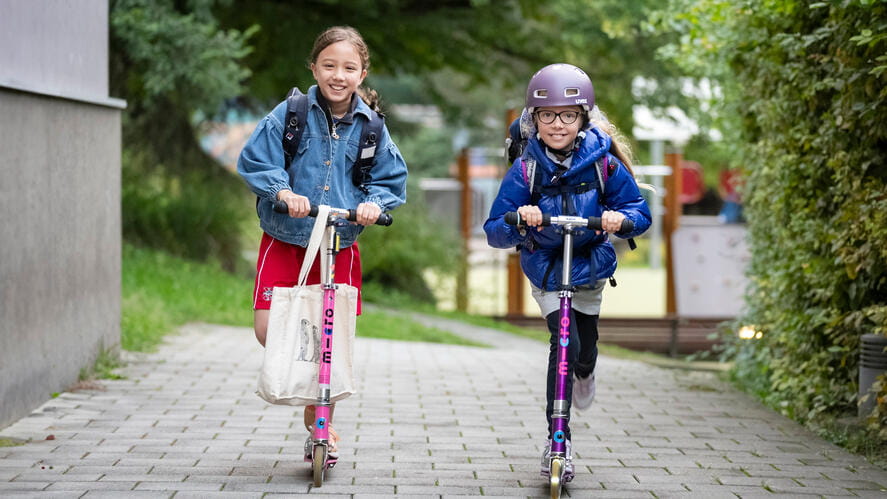
Start the conversations early
Children do better with change when they have had time to process it. Talk about the new school calmly and specifically. Not just “It's going to be great!” but “Here is what your day will look like, here is where you will eat lunch, here is who you can go to if you need help.”
Specific information reduces anxiety. Vague reassurance often does the opposite because children fill in the unknown with their own worries.
Let your child lead on what they are worried about
Ask open questions rather than offering pre-emptive reassurance. "What are you most looking forward to?" works better than "There is nothing to worry about." The second shuts down the conversation. The first gives your child space to say what is on their mind.
Take what they say seriously. If your child is worried about finding a friend at lunch, acknowledge their concern. Work through it together: what could they say to someone new, who could they look for, what might they have in common with other children starting at the same time?
Establish a consistent routine from the start
Children settle more quickly when the structure around them is predictable. The same wake-up time, the same morning routine, the same plan for after school. Predictability at home creates a stable base from which a child can manage the unpredictability of a new school environment.
In the first few weeks, keep after-school commitments light. Your child will come home tired, even if the school day was fine. Processing a new environment takes energy, even when nothing goes wrong.
Stay positive about the school in front of your child
Children take cues from their parents. If you express anxiety about the school, the teachers or the decision to move, children absorb that anxiety and carry it into the building with them. Even if you have concerns of your own, save those conversations for when your child is not in the room.
Talk about the school as somewhere interesting and worth discovering. Ask curious questions about the day rather than anxious ones. "Who did you talk to today?" lands differently from "Did anyone leave you out?"
Build in time to decompress after school
The first weeks in a new school are tiring in a specific way. Navigating new social dynamics, following new routines and concentrating in an unfamiliar environment uses a lot of cognitive and emotional energy. Your child may come home flat, quiet or more emotional than usual. This is normal.
Resist the urge to debrief the moment they walk in. Some children want to talk immediately. Many need thirty minutes of quiet before they are ready to say anything. Learn how your child feels most comfortable and follow their lead.
Communicate with the school
If something is not going well, tell the school early rather than waiting to see if it resolves itself. Pastoral teams are there precisely for this, and the earlier they are aware of a difficulty, the more quickly they can act.
Good international schools have structured induction programmes and designated points of contact for new families. At Champittet, you can reach our team through the admissions enquiry page or via the parent essentials section.
For children joining a bilingual school
Adjusting to a bilingual environment takes a little longer than adjusting to a new school in a familiar language. The good news is that most students who join a French-English school without strong skills in one of the languages catch up faster than their parents anticipate, because immersion is the most effective way to build a language and children have a natural advantage.
In the first weeks, focus on confidence rather than accuracy. Praising your child for trying, rather than correcting every mistake, keeps them willing to speak rather than retreating into silence.
If your teenager is heading into a new school this August, our summer routine tips article has practical advice on language preparation and getting mentally ready before term begins.
How Champittet supports new students
At Collège Champittet, every new student is personally supported to ensure a smooth transition. Our pastoral and wellbeing team, which includes a dedicated psychologist and school nurse across our campuses, guides children through every stage of settling in. New students are welcomed through a structured induction, matched with tutors and introduced to school life gradually rather than all at once.
Our bilingual programme is built on the understanding that language confidence takes time. Through guided immersion, children develop French and English language skills at a pace that builds real fluency rather than surface familiarity.
If you are thinking about enrolling your child at Collège Champittet, get in touch with our admissions team or book a visit. Our back to school checklist also covers everything else you need to prepare for a smooth start to September.
Frequently Asked Questions
How long does it usually take a child to settle into a new school?
Most children find their feet within four to six weeks, though the pace varies by age and from one individual to another. Younger children often adapt quickly once friendships form. Older children, particularly teenagers, may take a little longer to establish their social footing.
What should I do if my child says they do not want to go to school?
Take it seriously and ask your child what specifically feels difficult. If it continues beyond the first two weeks, contact the school's pastoral team. At Champittet, our health and wellbeing team is available to support families from the start of term.
Is it harder to settle into a bilingual school if my child only speaks one language?
Not necessarily. Schools with strong bilingual programmes are experienced at welcoming children at all language levels. Find out more about our approach on our academic excellence page.